Skeletons don’t send out warning signs when they start giving up. You usually only find out something is wrong when a minor trip or a clumsy step leaves you with a busted wrist or a cracked rib. That is why doctors rely on a quick, painless test called dual-energy X-ray absorptiometry, or a DEXA scan, to measure your bone mineral density before a sudden fracture catches you completely off guard. If you want to stay ahead of these silent changes, booking your next preventive screening or DEXA scan with Krsnaa Diagnostics provides the reliable imaging results you need to protect your long-term mobility.
What a DEXA Scan Actually Does
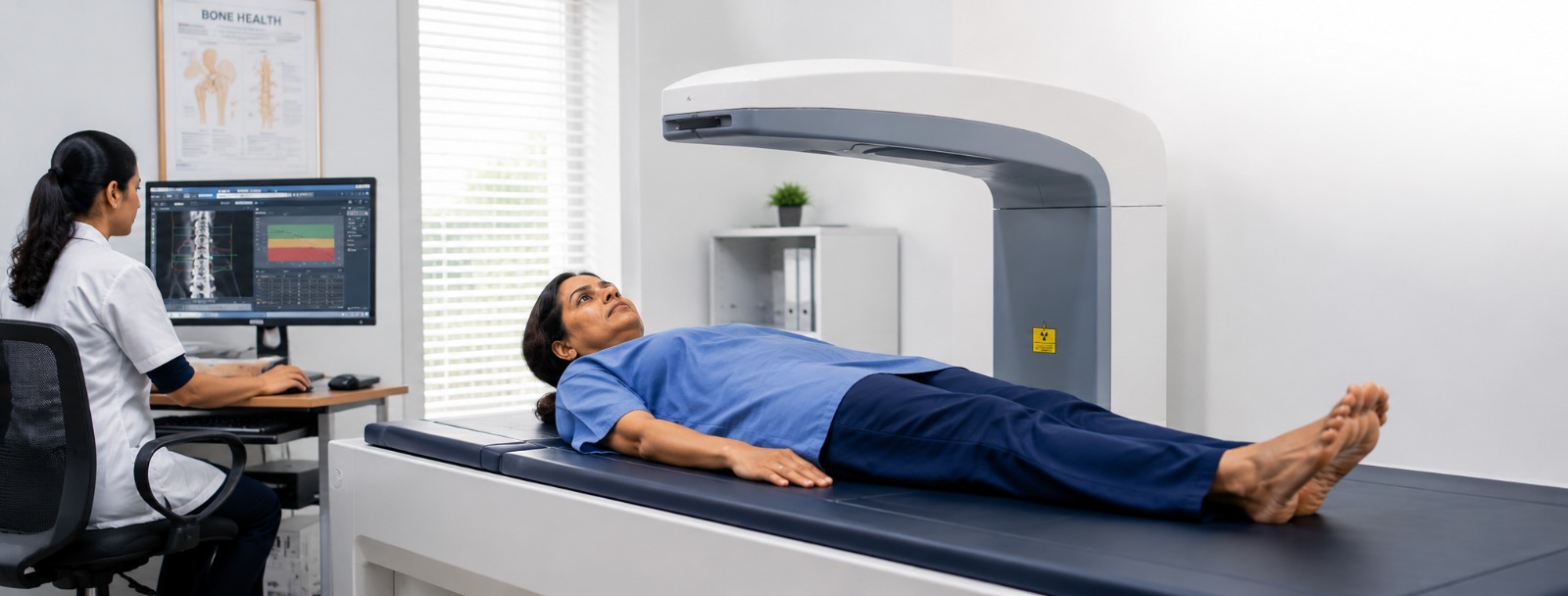
Think of it as a specialised, low-radiation X-ray that maps out the mineral strength in your lower spine, hip, and sometimes your forearm. The machine spits out a couple of technical numbers, your T-score and Z-score, which tell your physician whether your bones are dense and healthy, sliding into osteopenia, or dealing with advanced osteoporosis. It takes away the guesswork by putting exact numbers on bone strength.
When Screening Becomes Necessary
Medical guidelines don’t suggest random scans for everyone; they tie routine screening to specific age and health thresholds:
- Women aged 65 and older should get scanned routinely because postmenopausal hormonal drops rapidly accelerate bone loss.
- Postmenopausal women under 65 need a scan if they carry heavy risk factors like low body weight, a family history of broken bones, or a smoking habit.
- Men don’t get a free pass either; routine screening kicks in at age 70.
- Men between 50 and 69 should schedule a scan if they have underlying vulnerabilities like low testosterone or long-term steroid use.
When you fall into these categories, utilising state-of-the-art radiology services through Krsnaa Diagnostics ensures early detection and close monitoring for any developing bone health conditions.
Signs That Mean You Shouldn’t Wait
If you aren’t at the magic age cutoffs yet, certain lifestyle or medical triggers make early screening a smart move:
- Fracturing a bone from a minor fall or minimal impact after age 50 is a loud warning sign.
- Chronic conditions like rheumatoid arthritis, severe gastrointestinal issues, or thyroid imbalances drain bone strength over time.
- Prescription drugs, especially long-term glucocorticoids or certain cancer therapies like aromatase inhibitors, take a heavy toll on your skeletal framework.
- Everyday habits matter too; heavy drinking, a completely sedentary routine, or running low on calcium and vitamin D will catch up to you.
Tracking Your Progress
If your doctor catches early bone thinning or starts you on medication to protect your skeleton, a single scan isn’t enough. You will likely repeat a DEXA every one to two years to see if your lifestyle changes or treatments are actually holding the line.
Bone loss is completely silent until it isn’t. If you’ve hit the age markers or check off any of those risk factors, talk to your doctor about getting a scan on the calendar before a simple stumble turns into a major medical setback, and trust Krsnaa Diagnostics for affordable, high-precision laboratory and diagnostic healthcare solutions tailored to your wellness journey.