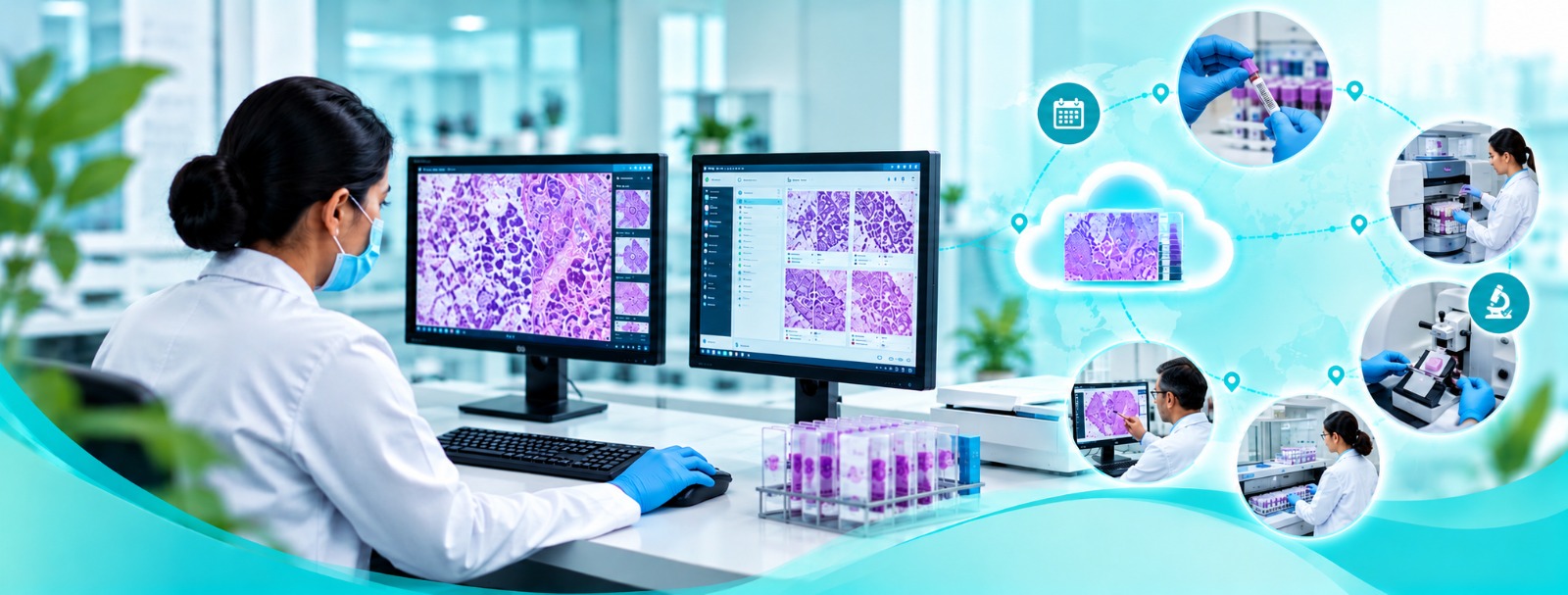
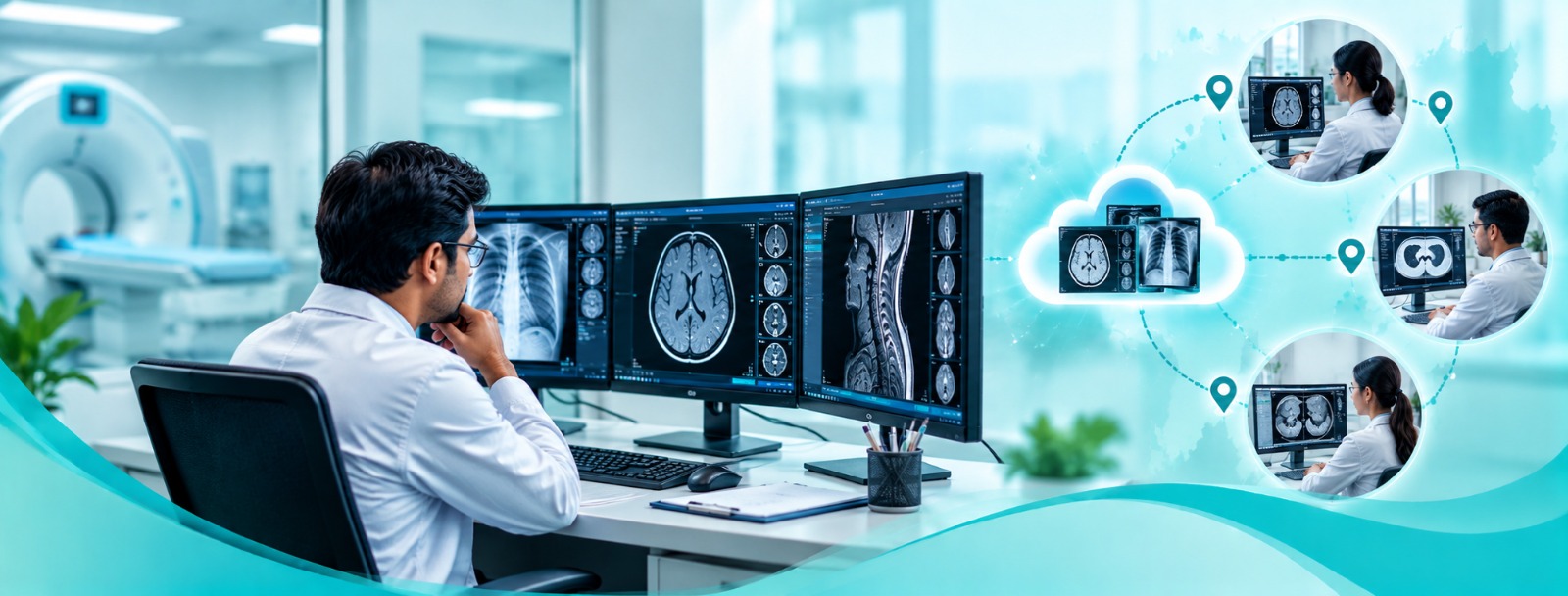
In the modern healthcare system, receiving timely diagnostics can be the difference between a successful intervention and a life-threatening emergency. With the constant influx of patients and the growing need for qualified radiologists in urban and rural settings alike, hospitals and diagnostic centres are under pressure to deliver faster results. This is where the concept of teleradiology, or the remote reading of medical scans, comes in. Teleradiology is the practice of electronically transmitting imaging scans from one location to another for diagnostic and report generation purposes.
How does the teleradiology process work?
Essentially, it is a 4-step procedure which involves quick and secure scanning. To begin with, an MRI, CT, Ultrasound, or an X-ray is taken in a hospital, diagnostic centre, or a clinic. Next, the imaging is securely encrypted (in a DICOM digital imaging format) encrypted and sent via email to the cloud-based Picture Archiving and Communication System, or PACS. Then, a remote radiologist reviews the images from an outside (as opposed to in-facility) reading station and verbally describes the results. Finally, the report is sent back to the hospital’s EMR (electronic medical records) system with minimal delay, thereby enabling physicians to make the next step in treatment with haste.
Benefits of teleradiology
By utilising the remote reading process, organisations take advantage of its many benefits, such as:
Quicker TAT: By removing distance as a factor in the diagnostic imaging process, teleradiology enables facilities to cut down on the time between scanning and the receipt of a report.
24/7/365 availability: By using outside vendors, hospitals benefit from scanning being available at all times, even on holidays and weekends. In addition, time zones enable the overseas transmission of scans to locations where local radiologists may not be available.
Access to a pool of specialists: By using teleradiology, hospitals and diagnostic centres gain access to a wealth of professional radiologists, some of whom may have areas of expertise that facilities lack.
Maintaining quality and security: As a process which deals with sensitive patient data, teleradiology requires that encryption and security software are in place to prevent breaches of confidentiality. Remote radiologists must have appropriate accreditation and legal status in the region in which they operate. The software utilised must be PACS-ready and DICOM-compliant in order to ensure that image quality is not sacrificed due to improper compression. Summary overview of the differences between traditional on-site radiology and teleradiology. Feature: Traditional On-Site Reporting; Teleradiology (Remote Reporting), available only on standard hours; 24/7/365 global coverage; TAT could be delayed overnight or over weekends; immediate reports, especially in trauma/emergency cases. Specialist access limited to in- house specialists. Access to a global network of radiologists, including sub-specialists. Impact on workflow creates potential for bottlenecks during busy periods; enables faster clinical decision-making
Conclusion
The remote reading of scans has revolutionised the healthcare industry in that it enables organisations to reduce TAT and, by extension, deliver better care to patients. By virtue of enabling hospitals to receive faster reports from qualified radiologists, teleradiology has allowed healthcare organisations to better care for patients in emergency situations.