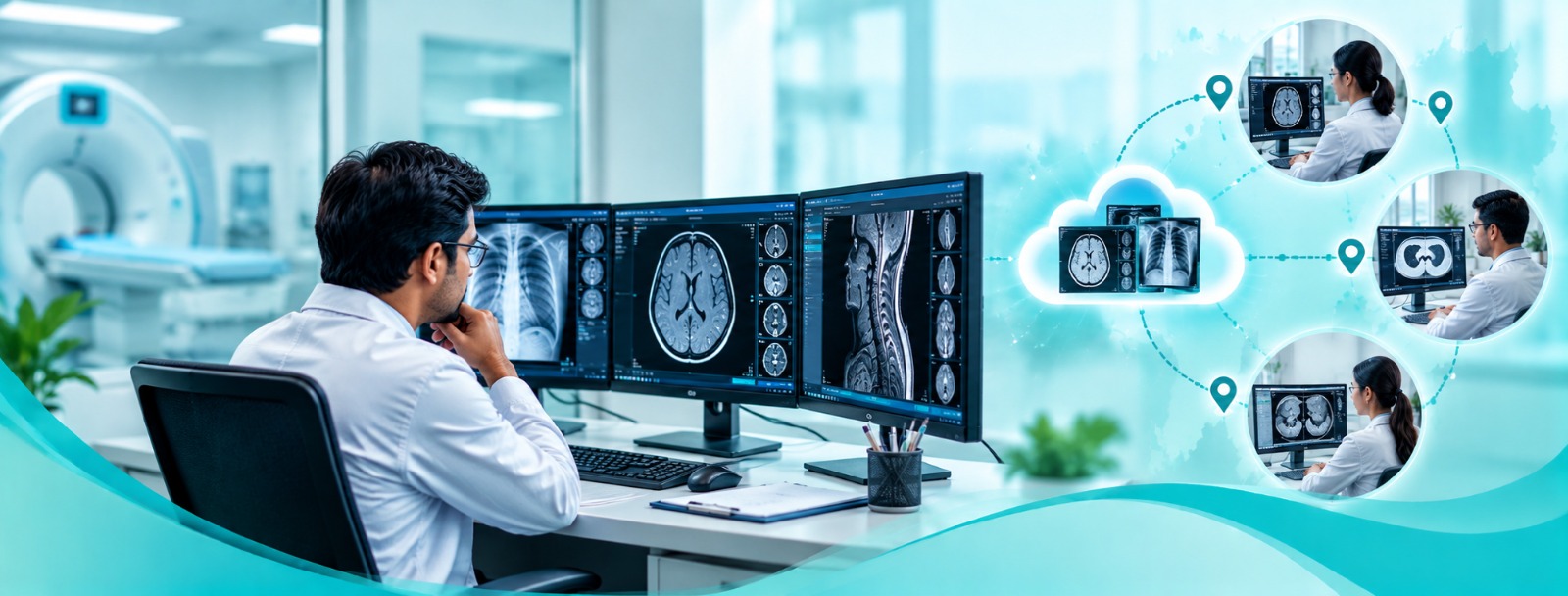
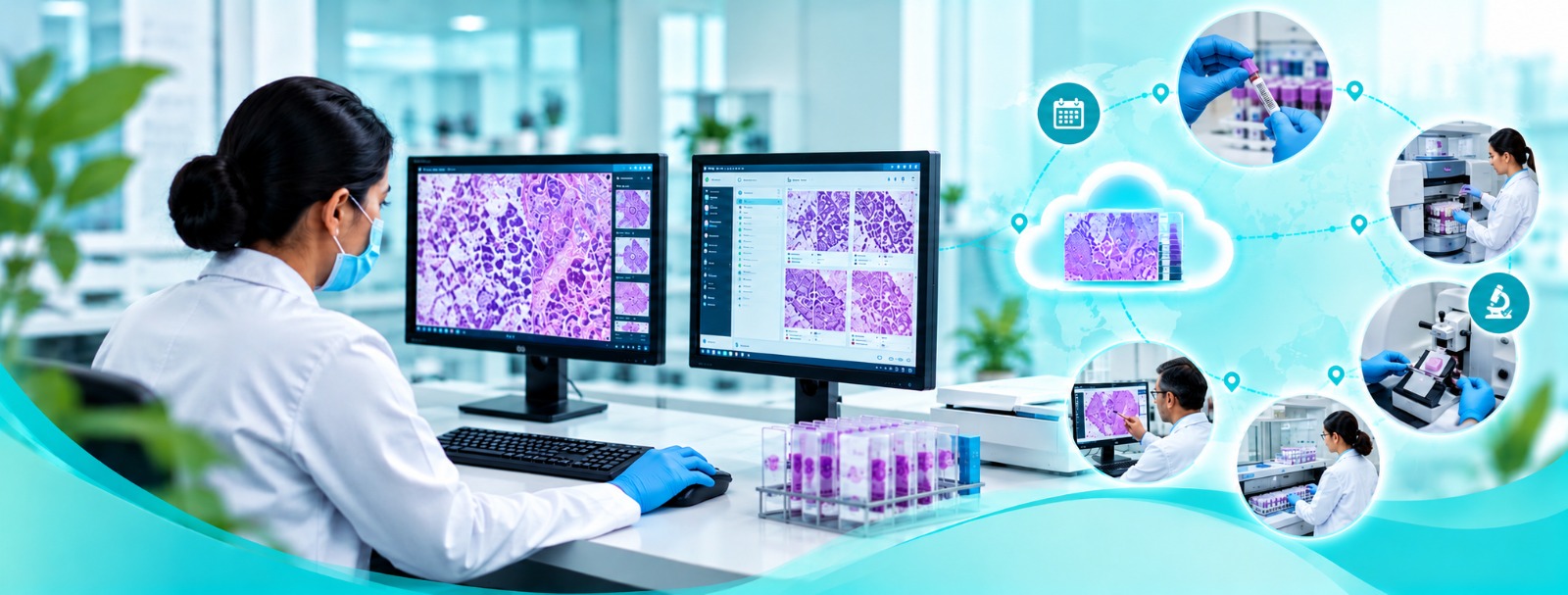
In the evolving landscape of modern health care, timely and accurate diagnosis is the cornerstone of effective treatment and swift patient recovery. Traditionally, pathology has relied on the examination of glass tissue slides under a microscope, a manual process that involves the transportation of these slides, which inevitably causes delays in diagnosis. Tele-pathology and digital pathology are the new paradigms in pathology that enable rapid, high-precision diagnosis for hospitals and diagnostic labs over telecommunication networks.
Tele-pathology and digital pathology enable remote diagnosis by digitising glass slides into ultra-high-definition whole slide imaging (WSI) files. These digitised files are then stored in secure cloud servers where authorised personnel can access the file to view, analyse, and diagnose the digital slide at any given time.
The Benefits of Digital Pathology to Patients
Digital pathology offers numerous benefits to patients, including:
1. Faster patient diagnosis reports
The delivery and receipt of glass slides between collection centres, laboratories and specialised tertiary hospitals is a very slow process, which causes delays in diagnosis. Tele-pathology facilitates faster slide distribution over secure digital networks, thus enabling pathologists to view the slide and start diagnosis immediately after scan completion. For critical patient diagnosis, time is always of the essence, and faster slide delivery is critical. Digital pathology enables faster diagnosis of routine blood tests, biopsies, and other medical tests, improving patient care.
2. Access to sub-specialist pathologists
Access to sub-specialist pathologists is a big challenge, especially for small hospitals and clinics that are not equipped with the best diagnostic tools. Tele-pathology and digital pathology enable remote access to sub-specialist pathologists, thereby facilitating faster, accurate diagnosis. Krsnaa Diagnostics has an extensive network of digital pathology partners that provide patients in tier-2, tier-3 and other remote locations with faster access to sub-specialist pathologists.
3. High precision diagnosis
Digital slides enable pathologists and medical researchers to magnify, measure and view tissue samples with incredible precision. Tele-consultation and collaboration between pathologists on digital slide images also improve diagnostic accuracy and precision.
4. AI and Machine Learning
Digital pathology provides a compatible interface for utilising cutting-edge technologies including AI and machine learning in pathology. These advanced technologies can be used to triage digital slides and highlight slides with diagnostic problems for pathologists to focus on. The use of AI and machine learning in pathology can improve diagnostic accuracy, speed up diagnosis and improve patient management.
The Future of Diagnostic Healthcare Lies in Tele-Pathology
Digital pathology will fundamentally change the diagnostic landscape by providing a faster, more accurate and remote way of examining digital slide images to produce high-precision diagnoses. By speeding up laboratory processes and ensuring diagnostic reports are generated faster, digital pathology will play a significant role in patient management and treatment. Digital pathology also facilitates faster access to pathologists and subspecialist pathologists, enabling remote and rapid second opinion consultations.
Healthcare systems around the world are striving to provide affordable and fast diagnosis and treatment to patients. One of the best ways of achieving this is through the use of tele-pathology and digital pathology. Digital pathology will help to create a better and faster healthcare system for all patients.
The importance of quality delivery in health care
Digital pathology will contribute to the quality assurance of health care by helping to generate better reports. Diagnostic reports can be retrieved from the cloud at any time, enabling peer reviews.
This will promote excellence in healthcare delivery, thus helping to provide better care and diagnosis to patients.