Pneumonia infection inflames the respiratory system. This causes the air sacs (alveoli) within one or both lungs to become filled with fluid or pus. Pneumonia can be caused by bacteria, viruses, or fungal infections.
Accurate diagnostic tests are crucial to diagnosing pneumonia. As symptoms can be similar to bronchitis or even a common viral infection, early investigations can help your doctor diagnose accurately, confirm the cause and provide targeted treatment.
Initial Investigations
- Physical Examination:
Listening to the lungs using a stethoscope to detect any abnormal noises such as crackles, gurgling or wheezing.
Oxygen saturation monitoring using a pulse oximeter attached to your fingertips. This measures how much oxygen is saturating your blood. If you have low oxygen levels, then you are struggling with gas exchange due to the inflammation of the lungs.
- Diagnostic Tests
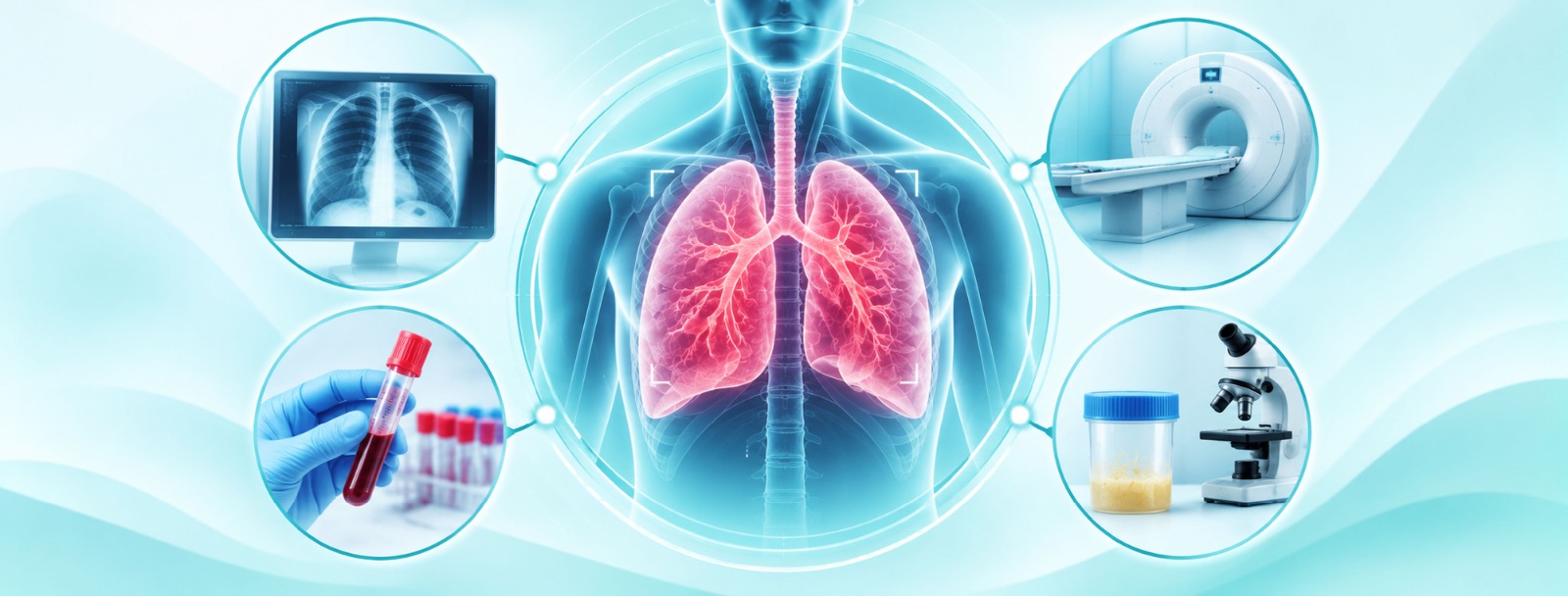
In order to confirm if you have pneumonia, we use a combination of imaging and investigations.
- Chest X-Ray
This is the main investigation we use to confirm if you have pneumonia. We can see changes in the lungs such as infiltration, consolidation and fluid. This will help confirm where and how severe the infection is.
A high-resolution CT scan may be recommended if your symptoms are severe, the chest X-ray was inconclusive, or there is suspicion of complications. This provides detailed imaging of the lungs.
- Blood Tests
This will show us your white blood cells (WBC). If you have high levels, it is likely you have a bacterial infection. If your levels are normal or low, then it is likely you have a viral infection.
- Arterial Blood Gas (ABG)
This test will show us your oxygen and carbon dioxide levels. This test is performed on arterial blood and is used for those who are admitted or have severe symptoms.
- Sputum Culture & Gram Stain
This involves analysing the phlegm you cough up. This helps us identify what is causing the infection and antibiotic sensitivity.
- Blood Culture
For those with severe symptoms, we can perform a blood culture to see if the infection has spread to your blood.
- Pleural Effusion Culture
If there is fluid buildup around your lungs (Pleural Effusion), we can perform a culture by taking some of the fluid using a Thoracentesis.
Differentiating between bacterial and viral pneumonia is key to ensuring you are given the correct treatment. We have everything available, including digital X-rays, high-resolution CT scans and full pathology to ensure we have a high level of accuracy.
Using our AI-assisted teleradiology network, we can interpret your imaging quickly. We work with accredited pathology labs so we can provide quick turnaround times on emergency respiratory scans. This means your doctor can get the results they need to begin effective treatment.
To Summarise
If you or a family member are experiencing persistent high-grade fevers, chest pain when breathing and shortness of breath, you should seek medical attention. Investigations such as chest X-rays, blood tests and sputum tests will provide the answers needed to effectively treat your pneumonia.