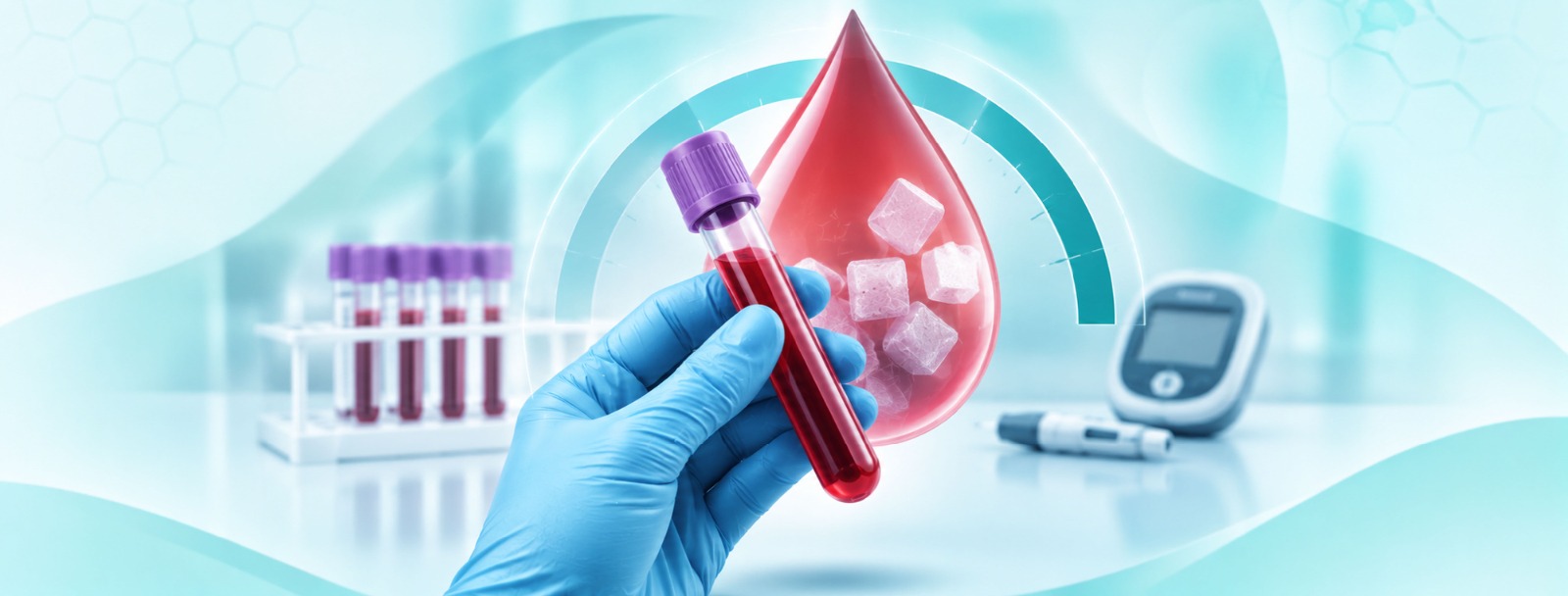
All of these are metabolic conditions which cause an increase in glucose levels in your blood. This can happen due to insulin resistance or lack of insulin production. Pre-diabetes can also be a silent condition causing few or no symptoms.
Type one diabetes doesn’t have many symptoms, so you must get tested in a lab. This allows you to pick up any changes to your metabolism and make lifestyle changes or receive treatment.
Common Tests to detect Diabetes or Pre-diabetes.
You will most likely get some of these tests done by your healthcare professional.
HbA1c
Measures the amount of glucose that has bound to your Haemoglobin. Haemoglobin is the protein that carries oxygen around your red blood cells. As your red blood cells live for around 3 months, this test provides an average for your blood sugar control over the last 8-12 weeks. No need to fast.
- Normal – <5.7%
- Pre-diabetic – 5.7%-6.4%
- Diabetic – 6.5%+ (on 2 occasions)
- Fasting Plasma Glucose
Measures your blood glucose levels after fasting.
- Fasting – 8-12 hours (water only)
- Normal – 70-99mg/dL
- Pre-diabetic – 100-125mg/dL (Impaired Fasting Glucose)
- Diabetic – 126mg/dL+ (on 2 occasions)
Oral Glucose Tolerance Test
This test measures your ability to remove sugar from your blood after taking a high concentration of glucose. This is often used during pregnancy to screen for gestational diabetes. It is also used to confirm borderline pre-diabetes.
You will be asked to fast overnight. You will then be given a fixed solution containing 75g of glucose. After 2 hours, your blood will be taken.
- Normal – <140mg/dL (2-hour post-glucose)
- Pre-diabetic – 140-199mg/dL (Impaired Glucose Tolerance)
- Diabetic – 200mg/dL+
- Random Blood Sugar
This test measures your blood glucose levels at any time.
Used mainly to quickly determine if someone has symptoms of diabetes. This includes increased thirst (Polydipsia), frequent urination (Polyuria), Blurry vision or unexplained weight loss.
If you have symptoms of diabetes and your levels are 200mg/dL+, you may have diabetes. This should be confirmed by completing a fasting or HbA1c test.
What do the results mean?
- Normal: <100mg/dL fasting and <5.7% HbA1c.
- Pre-diabetic: 100-125mg/dL fasting or 5.7-6.4% HbA1c. This means your body is struggling to control your glucose. This is a great opportunity to try and turn this around by making lifestyle changes.
- Diabetic: 126mg/dL+ fasting, 6.5%+ HbA1c or 200mg/dL+ Oral Glucose Tolerance Test (2 hour).
Other tests to assess overall metabolism
If you have chronically high blood sugar levels this can cause stress to your arteries and blood lipids. Often you will be tested for your blood lipids, kidney function and microalbumin in your urine.
Krsnaa Diagnostics and other reputable companies will use automated analysers and have strict procedures to make sure you get accurate results quickly. They will also be NABL accredited.
Conclusion
Detecting pre-diabetes and diabetes early will give you the best chance of avoiding microvascular and macrovascular issues. If you have a family history of diabetes, hypertension or are over 30 years old it is important to get tested regularly to stay in control of your health.