
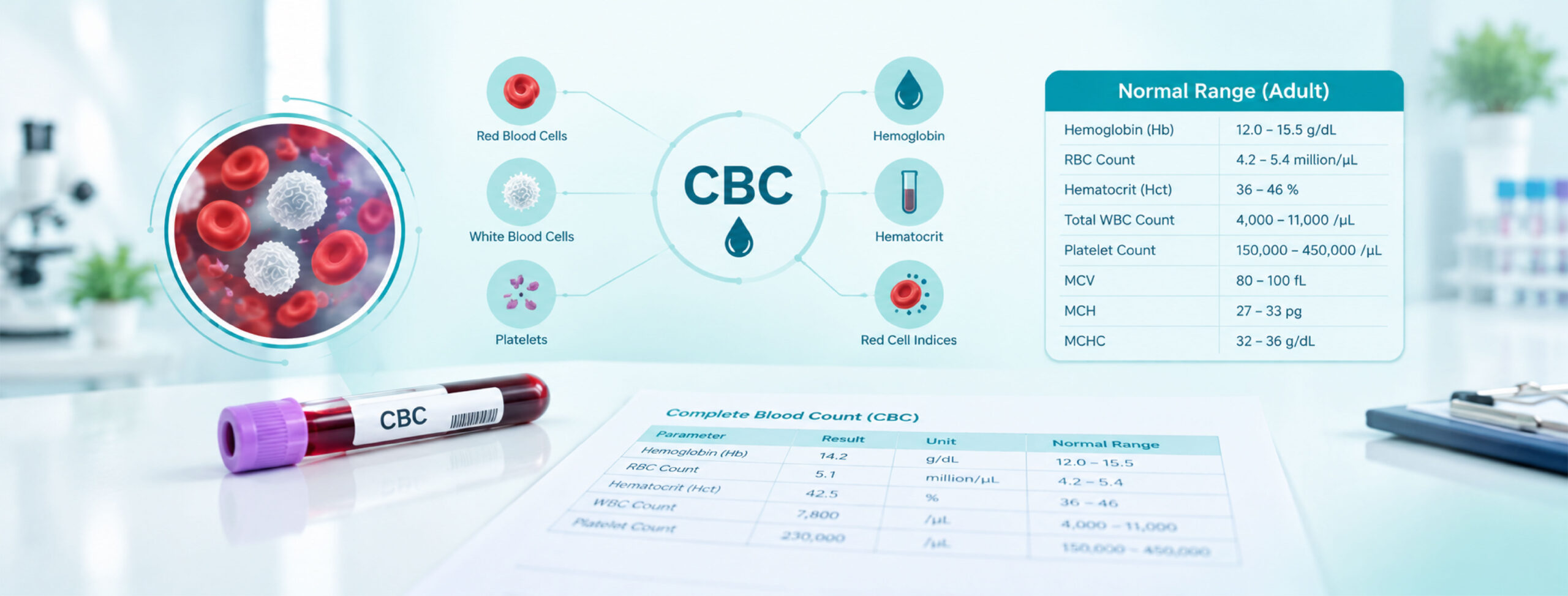
The Complete Blood Count (CBC) test determines the amount of red blood cells, platelets, white blood cells, haemoglobin and haematocrit in a blood sample. Doctors use the results to estimate general health, investigate symptoms and track the progress of diseases or treatment.
Usually, the test is done by drawing a blood sample from a vein in the arm. It generally does not require any special preparation ahead of time, unless other tests are done together.
CBC Test Normal Range
CBC test normal ranges may vary from one laboratory to another, and with age, sex, pregnancy and other factors. The table below shows some of the average normal ranges in adults:
Blood Component Typical Normal Range
- Haemoglobin (male) 13-17 g/dL
- Haemoglobin (female) 12-16 g/dL
- Red Blood Cell (RBC) count (male) 4.5-6.1 million/µL
- Red Blood Cell (RBC) count (female) 4-5.4 million/µL
- White Blood Cell (WBC) count 4,000-11,000 cells/µL
- Platelet count 150,000-400,000/µL
- Haematocrit (male) 40-55%
- Haematocrit (female) 36-48%
- Mean Corpuscular Volume (MCV) 80-100 fL
Note that the values above are just an average guide. Always use the ranges that come with your lab results and consult a doctor about the implications.
Different CBC Parameters Mean
1.Red blood cells:
RBCs carry oxygen from the lungs to all parts of the body. They carry carbon dioxide back to the lungs for the exhaling process. A below-normal RBC count indicates anaemia and poor oxygen supply to the body tissues. A higher-than-normal RBC count may signal dehydration or polycythemia, a condition in which a patient’s red blood cell count is higher than the usual blood count.
- Haemoglobin:
This is a protein found in RBCs that carries iron. A below-normal Hb level indicates anaemia and signs of iron deficiency. It may also signal internal bleeding. A high Hb level, on the other hand, may be caused by dehydration.
- White blood cells:
White blood cells or leukocytes are the body’s infection savers. A higher than normal WBC indicates an infection or an inflammatory condition. It may also indicate a reaction to drugs or an autoimmune disease. A low WBC count may mean a viral infection, for example, HIV or flu.
- Platelets:
The platelets are involved in blood clotting; they make sure that you do not bleed too easily. Too low platelets make the person anaemic and prone to excessive bleeding and poor healing of wounds, particularly from frequent insect bites. High platelet levels could be caused by inflammation or iron-deficiency anaemia.
- RBC indices:
This is a set of measurements that include MCV, the average RBC volume, Mean Corpuscular Haemoglobin and Mean Corpuscular Haemoglobin Concentration. The RBC indices are used to help determine the cause of abnormal RBCs and to screen for anaemia.
What Do Abnormal CBC Results Mean?
An abnormal CBC result does not necessarily mean that there is something seriously wrong. Temporary conditions such as infections, being anaemic, dehydration, or effects of certain drugs can also cause abnormal results. Doctors consider individual health status and may request additional tests if necessary.
Why Is a CBC Test Important?
Besides regular health screening, a CBC test can help investigate the cause of fatigue or general weakness. It is vital to detect and monitor infections and anaemia, as well as the impact of therapy; for example, in the case of HIV, the treatment’s success is determined by changes to the blood.
Conclusion
The Complete Blood Count is essential to detecting possible blood problems. Understanding normal ranges and what they mean will help you assess your report – but remember that a doctor will also interpret your results to help devise the best plan for your health.