Navigating diagnostic imaging requirements begins with identifying a reliable CT scan centre near me that balances advanced medical technology with rigorous clinical safety standards. Selecting an appropriate facility ensures optimal diagnostic yield, minimal radiation exposure, and precise anatomical visualisation necessary for effective medical management. When evaluating diagnostic providers, patients should prioritise facilities like Krsnaa Diagnostics that integrate cutting-edge multi-detector computed tomography hardware with robust quality assurance frameworks to deliver affordable CT scan services without compromising clinical precision.
The diagnostic accuracy of a computed tomography procedure depends significantly on the hardware specifications of the scanner. Modern facilities operated by trusted providers such as Krsnaa Diagnostics utilise advanced multi-detector computed tomography systems capable of high-slice acquisition, including 16 slice ct scan, 64 slice ct scan, and 128-slice configurations. These advanced scanners reduce motion artefacts, shorten scan times, and provide superior spatial resolution for complex cardiac, neurological, and oncological evaluations. Furthermore, certified laboratories employ iterative reconstruction software and automated dose modulation algorithms to minimise ionising radiation exposure in strict compliance with international diagnostic reference levels during every diagnostic CT scan.
Verifying institutional accreditations is another critical step in ensuring clinical reliability. Leading networks like Krsnaa Diagnostics maintain adherence to quality assurance protocols, routine equipment calibration, and rigorous safety audits mandated by healthcare regulatory bodies.
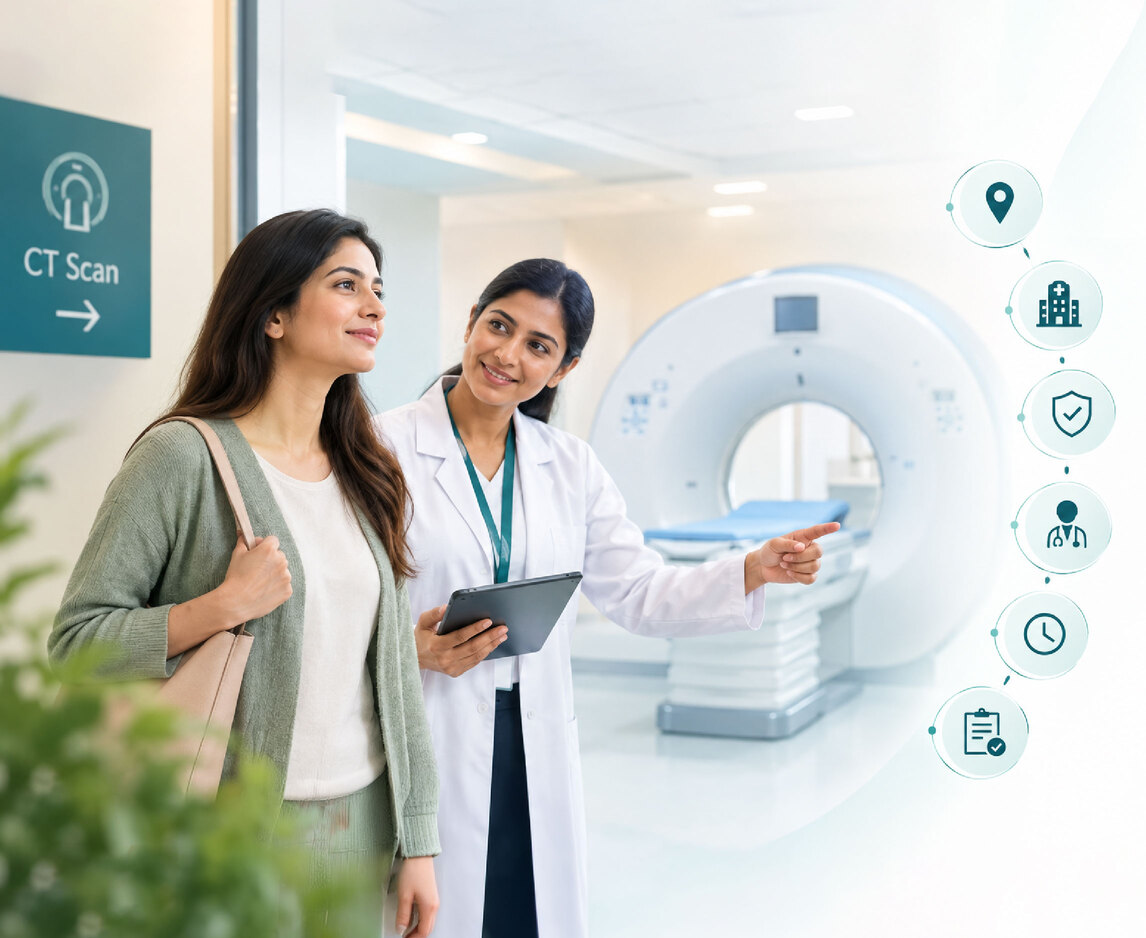
Certified laboratories maintain high standards for infection control, contrast media management, and emergency preparedness in the event of adverse pharmacological reactions. Additionally, the clinical reliability of a scan relies heavily on the qualifications of the reporting physician. Expert radiologists with subspecialty expertise in areas such as neuroradiology, musculoskeletal imaging, or oncological staging ensure that complex pathological findings are documented comprehensively in the final radiological report provided by a trusted pathology lab and diagnostic centre.
Prompt reporting is vital, particularly for acute presentations involving trauma, acute stroke, or severe abdominal pain. Facilities must offer streamlined digital access to diagnostic reports and high-resolution digital imaging files through secure picture archiving and communication systems, allowing attending physicians to coordinate timely therapeutic interventions. Many computed tomography procedures also require the administration of iodinated contrast agents to enhance vascular and tissue contrast. A qualified diagnostic centre must conduct a thorough pre-procedure clinical evaluation, including serum creatinine and estimated glomerular filtration rate assessments, to identify patients at risk for contrast-induced nephropathy while maintaining immediate access to emergency resuscitation medications for any emergency CT scan requirement.