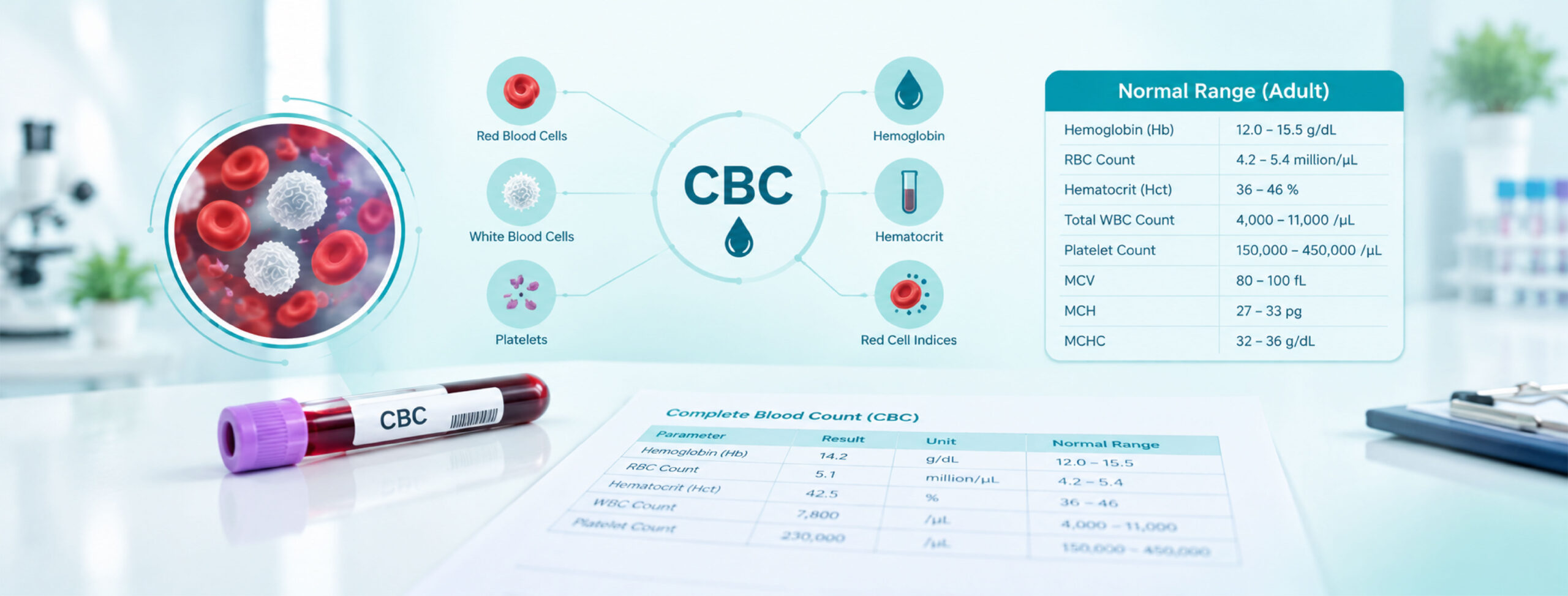

Laboratory diagnostics serve as an objective window into internal physiological function, translating complex biological markers into quantifiable data. When reviewing a standard blood test report, encountering unfamiliar medical acronyms, decimal values, and high-or-low flags can feel overwhelming without proper context.
Interpreting laboratory results systematically transforms raw data into actionable health insights. The first step is to review the reference range column printed next to each biomarker result. Because analytical equipment and testing protocols vary across medical facilities, these specific brackets define normal parameters for that particular laboratory. A value falling within the designated range indicates standard physiological function, whereas a measurement outside the bracket warrants clinical evaluation rather than immediate alarm.
Let’s look at the first major block: the Complete Blood Count, or CBC. This is basically a headcount of what is floating through your veins. Look down for haemoglobin. If that number is dragging below the lab’s normal range, congratulations, you just found the exact reason why you feel completely exhausted by three in the afternoon. It means your body is low on the protein that ferries oxygen around.
Next up on that same CBC sheet are your white blood cells. If that specific number is spiked high, it isn’t a mystery; your body is actively fighting off a bug or dealing with some hidden inflammation. Glance down further at your platelets. Those little guys handle your clotting. If they are normal, your body is fully equipped to handle everyday scrapes and bruises.
Now, flip down to the lipid profile, which is essentially your cardiovascular scorecard. Your eyes should immediately go to LDL cholesterol. Everyone calls it the bad cholesterol for a reason—if that number climbs too high over the years, it starts building unwanted deposits in your arteries.
Right next to it, look for HDL. You actually want this one to run high because it acts like a little cleanup crew, sweeping extra fats out of your bloodstream. Check your triglycerides too, which track unburned calories turning into stored fat. If your LDL and triglycerides are both high while your HDL is low, that is your cue to rethink your weekend takeout habits.
Finally, find your thyroid panel, usually marked by TSH. This tiny hormone acts as your body’s master thermostat. If your TSH number has drifted way above the normal bracket, your system is running sluggishly, which explains stubborn weight gain or waking up tired even after eight hours. If it has crashed way down, your engine is redlining in overdrive.
The secret to reading your labs isn’t memorising every single chemical acronym. It is realising that a single weird number on a PDF is just a data point, not a final verdict. The real magic happens when you take that sheet, sit down with a doctor who actually listens, and look at how those numbers connect to your real, everyday life.